
Outdoors
The gardens at Eltham Palace
The gardens at Eltham Palace cover 19 acres inside the medieval moat and were re-designed for Stephen and Virginia Courtauld in 1934 by the head gardener William Hendrie, working with the architects Seely & Paget. The layout keeps the medieval bones of the site — the moat itself dates from about 1300, the stone bridge from about 1400 — and adds a series of formal enclosures, a rock garden across the moat, and long views south over an ornamental meadow.
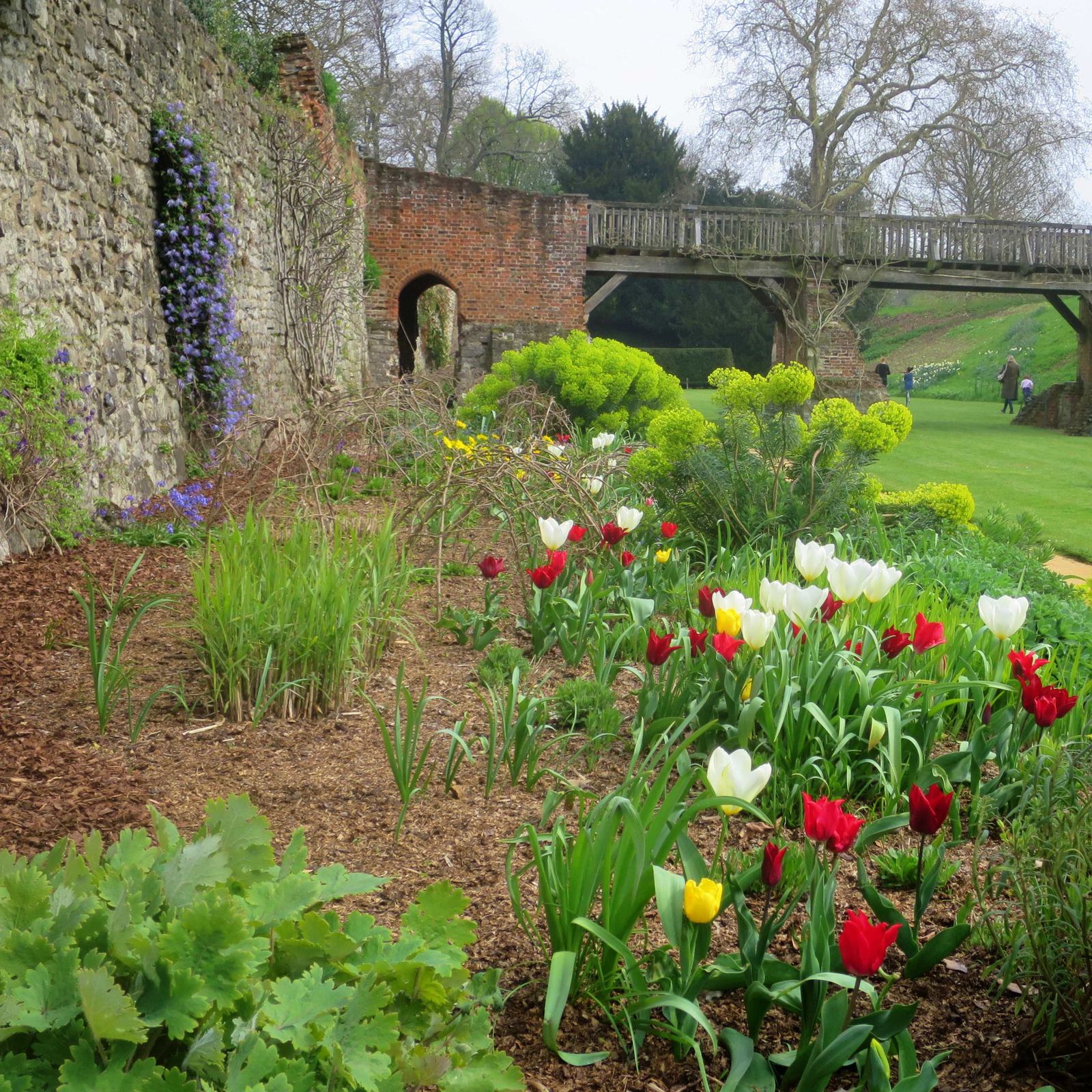
The medieval moat
The moat is the oldest surviving element of the palace, dug in the late thirteenth century when the site was still a fortified manor of Bishop Antony Bek of Durham. It has held water continuously for more than 700 years and is now home to grey wagtails, moorhens and occasional kingfishers. The stone bridge, built around 1400 for Edward III's remodelling of the palace, is thought to be the oldest working bridge in London — visitors cross it every day to reach the rock garden.
The sunken rose garden
The sunken rose garden was cut into the ground level next to the south front in 1934 to give a sheltered microclimate for hybrid teas. It is planted in a soft palette of apricot, pale pink and cream, with a central path leading to a stone urn from Virginia Courtauld's family estate in Italy. The roses peak in mid-June and flush again in early September.
The rock garden
Across the moat, the rock garden is a large 1930s Alpine-style planting on a slope of Kentish ragstone. Its paths lead through drifts of geranium, saxifrage, dianthus and campanula, with mature acers turning colour in October. This part of the garden is quieter than the house and often overlooked; it is worth 30 minutes on its own.
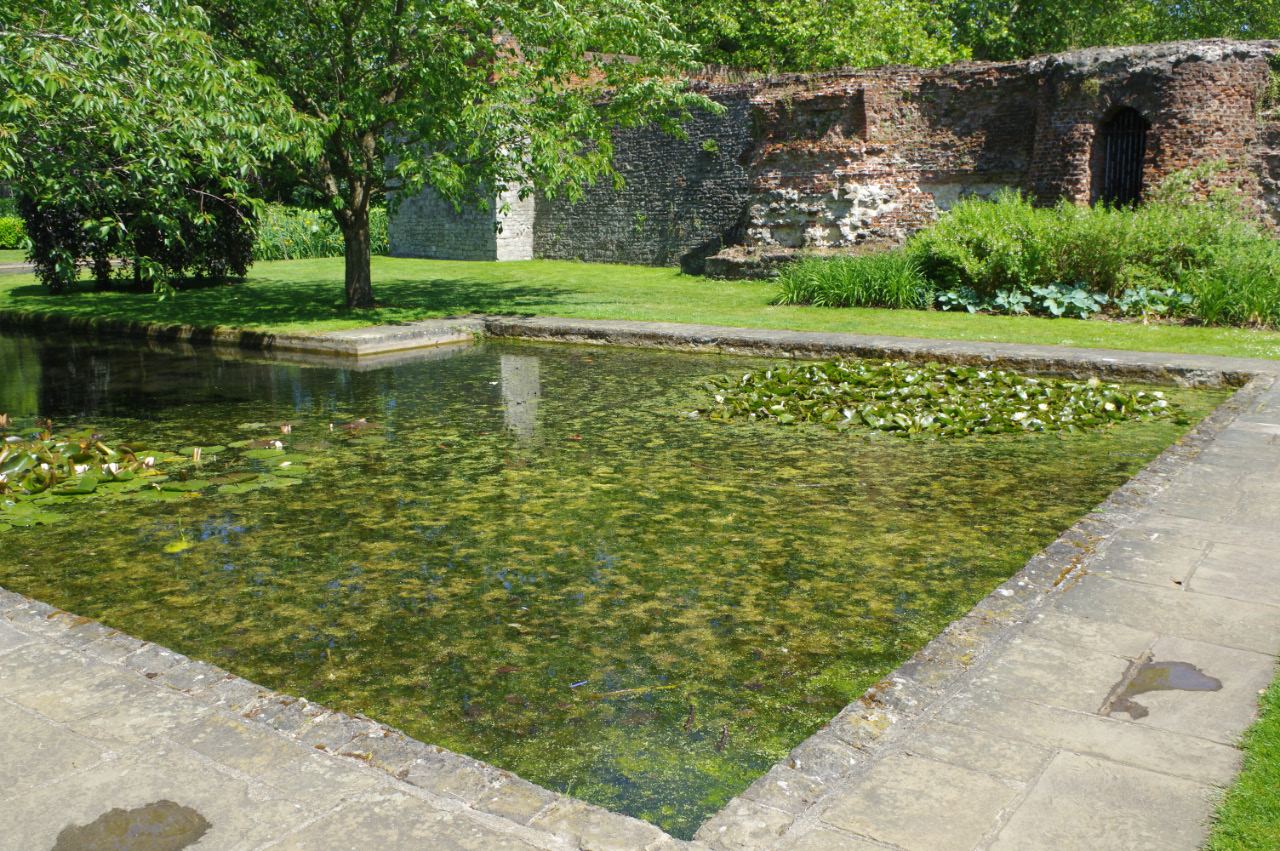
The south lawn and meadow
The south lawn slopes gently towards a strip of wildflower meadow re-seeded in 2015 with native yellow rattle, ox-eye daisy and knapweed. In late spring the meadow is left long and grows to knee height by July; a mown path threads through it to the boundary hedge, from which there is a distant view towards Shooter's Hill.
Seasonal calendar
- April – May: tulips and wisteria on the loggia.
- June: peak roses; peonies in the border under the loggia.
- July – August: meadow in full flower; long shadows on the moat.
- September: second flush of roses; late-summer herbaceous colour.
- October – November: acer colour in the rock garden.
- December: holly, ivy and frost — atmospheric on a still morning.
For visiting logistics see visiting information and tickets and opening times. For family visits, see our family day-out guide.
Frequently asked questions
Are the Eltham Palace gardens included in the ticket?
Yes. Entry to the 19 acres of gardens is included in every ticket to Eltham Palace. English Heritage members can also visit the gardens free of charge in season.
Can I visit only the gardens without going inside the house?
Yes, a gardens-only ticket is available at the door for £8.50 in 2026. It gives access to the moat, sunken rose garden, rock garden and south lawn, but not to the Great Hall or Art Deco interiors.
When are the gardens at their best?
The rose garden peaks in June and repeats in early September. The wisteria on the loggia is best in mid-May. Autumn colour in the meadow and along the moat runs from mid-October to early November.